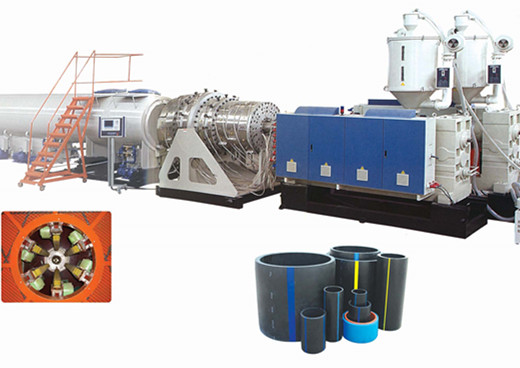
Wood Plastic Composite (WPC) profile production lines are specialized extrusion systems designed to manufacture profiles from a blend of wood fibers and thermoplastics. These lines produce decking boards, window frames, door frames, fencing, outdoor cladding, and furniture components, offering a sustainable alternative to traditional materials. This guide covers the key components, technology, and selection considerations for WPC profile production lines.
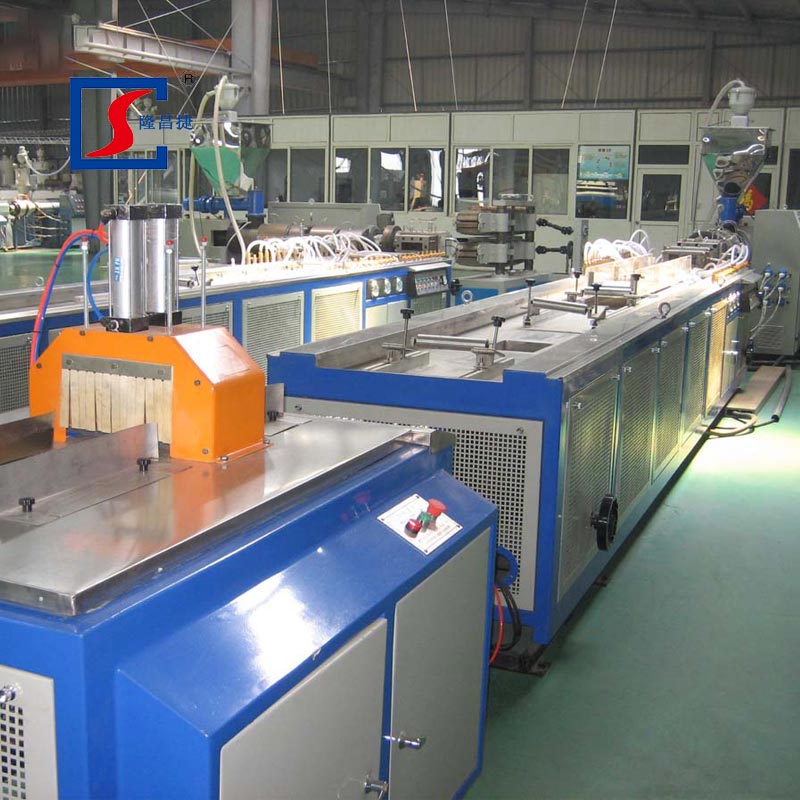
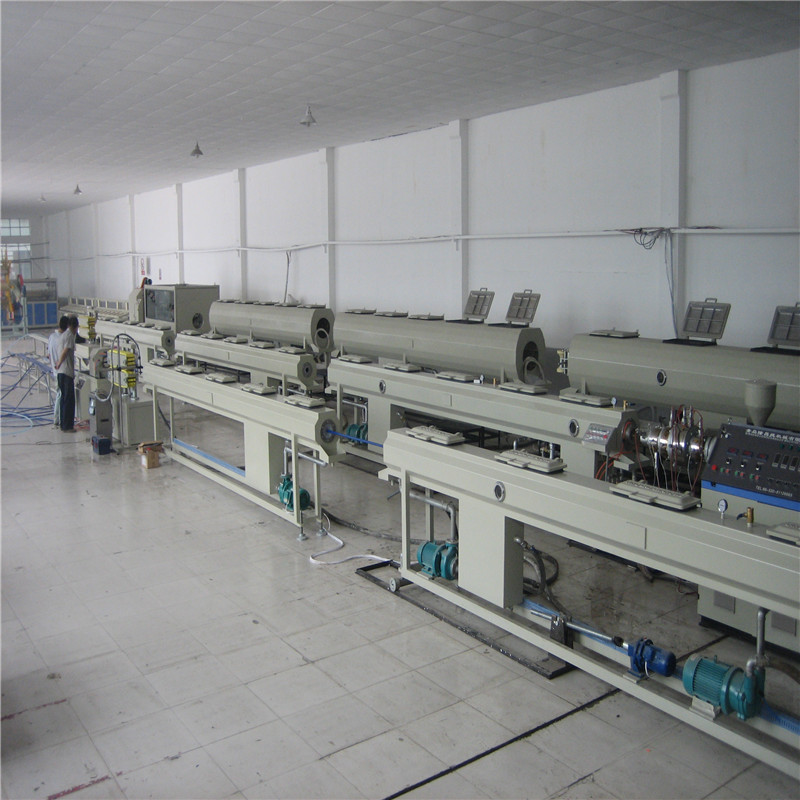
A wood plastic profile production line is an integrated extrusion system that processes a mixture of wood flour, plastic polymers, and additives into finished profiles with consistent quality. The line combines multiple units that work in sequence to blend, extrude, shape, cool, and cut the material.
WPC is a composite material made from a blend of vegetable powders and thermoplastic polymers such as PVC, PE, or PP. It is designed to replace wood in applications where durability, resistance, and sustainability are key requirements. WPC profiles maintain the natural look of wood while reducing maintenance costs and vulnerability to external agents.
WPC profiles produced on these lines offer several advantages over traditional materials. They are resistant to corrosion, weathering, and UV rays, and provide excellent resistance to insects, including termites. The material is more cost-effective than natural wood while maintaining a wood-like aesthetic appeal. WPC does not require large-scale maintenance or special treatments for laying, and it serves as an excellent thermal insulator that is flame retardant. Additionally, WPC is fully recyclable, supporting circular economy principles.
A complete WPC profile production line consists of several core components.
The extruder is the heart of the production line. Most WPC profile lines use a conical twin-screw extruder, which provides efficient mixing and controlled plasticization even with high percentages of natural filler. The conical design allows for better degassing and ensures excellent material plasticization, which is critical because wood flour typically contains about 5 to 6 percent moisture that must be removed during processing.
The parallel counter-rotating twin-screw extruders found in modern lines are designed to guarantee high torque, effective mixing, and precise thermal control along the barrel. Available configurations cover a wide range of production needs, with screw diameters up to 158 millimeters and L/D ratios up to 36.
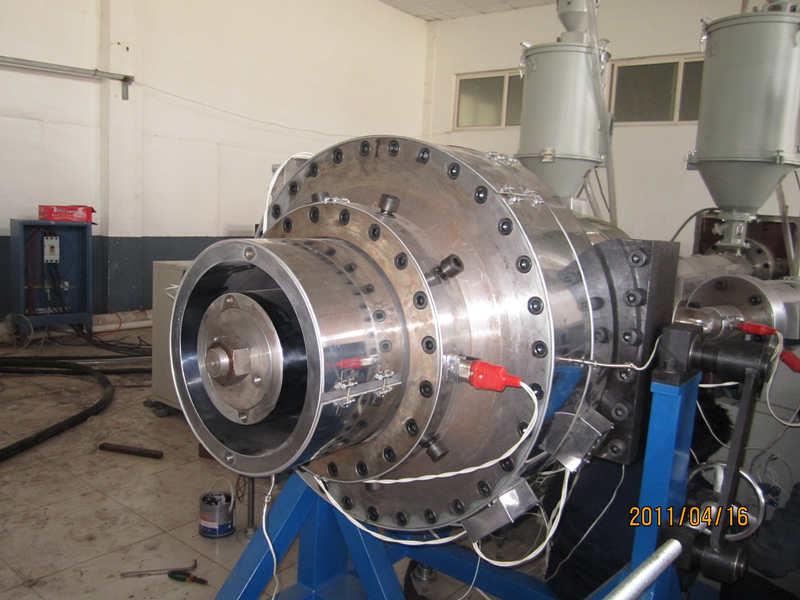
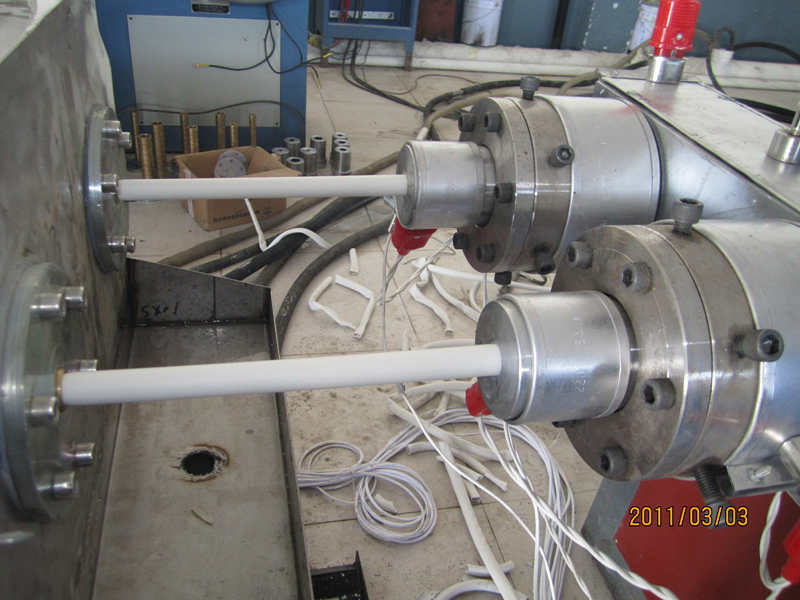
The die shapes the molten compound into the desired profile cross-section. For WPC, custom-designed dies accommodate solid, hollow, or co-extruded profiles. Plate moulds with optimized channel design ensure high flow performance and high precision. Co-extrusion allows a surface layer with specific characteristics, such as greater wear resistance and color stability, to be applied directly in-line.
After the profile exits the die, it passes through a calibration and cooling system. The calibration table ensures dimensional stability even on large sections. It features stable steel frames, often made of SUS 304 stainless steel, with multi-dimension position adjustment systems. Water pumps and vacuum calibrators rapidly shape and cool the profile while maintaining its structural integrity.
The haul-off unit pulls the cooled profile through the line at a consistent speed. For heavy WPC profiles, high-grip crawler-type haul-off units are typically used to ensure stable traction without damaging the profile surface.
The saw cutter automatically cuts the profile to designated lengths. With automatic control systems, the entire cutting process is intelligent and easy to operate. Synchronized cutting systems ensure repeatable lengths and clean surfaces.
| Parameter | Typical Range |
|---|---|
| Extruder Model | SJZ55/110, SJZ65/132, SJZ80/156, SJZ92/188 |
| Main Motor Power | 22 kW – 110 kW |
| Maximum Product Width | Up to 1,200 mm |
| Output Capacity | 70 – 580 kg/h |
| Cooling Water Requirement | 5 – 15 m³/h |
| Compressed Air Requirement | 0.2 – 1.0 m³/min |
| Production Line Length | 18 – 30 meters |
The typical process flow for a WPC profile production line involves several stages.
Material Preparation. Raw materials including plastic polymers, wood flour, coupling agents, stabilizers, lubricants, and pigments are prepared and precisely metered. WPC typically contains 40 to 50 percent cellulose, 15 to 25 percent hemicellulose, and 15 to 30 percent lignin from the wood component, combined with a polymer matrix such as PVC, PE, or PP.
Mixing and Compounding. The materials are mixed to achieve a homogeneous blend. This can be done in a batch mixer or through continuous compounding. The dispersion of wood fibers in the plastic matrix is critical to the final product quality.
Feeding. The blended material is fed into the extruder using gravimetric feeders to ensure consistent material flow. The moisture content of the feedstock must be controlled, as processing temperatures of approximately 200°C can cause thermal degradation of wood fibers if moisture is not properly managed.
Extrusion. The compound is melted, mixed, and conveyed through the extruder. The screw mechanism applies shear forces to homogenize the hydrophilic wood fibers with the hydrophobic polymer. Parallel twin-screw extruders ensure homogeneous plasticization and uniform fiber distribution.
Shaping. The molten compound passes through the extrusion die to form the profile cross-section.
Calibration and Cooling. The profile is shaped and cooled through the calibration table to ensure dimensional stability.
Hauling. The profile is pulled through the line at a consistent speed by the haul-off unit.
Cutting. The profile is cut to length by the saw cutter.
Stacking. Finished profiles are collected on the discharge rack for packaging and shipping.
The choice of extruder type significantly impacts production efficiency and product quality.
Twin-Screw Extruders are generally preferred for WPC profile production. Parallel counter-rotating twin-screw extruders offer advantages including low screw revolutions per minute, which reduces the risk of burning the materials and minimizes heat generation. They also provide excellent mixing efficiency and do not require extensive pre-treatment of the feedstock.
Single-Screw Extruders have lower investment costs but typically require pre-mixing and pre-drying of materials, have a lower production rate, and may struggle to maintain low melt temperatures with higher head pressure.
An alternative approach involves using a continuous mixer combined with a single-screw extruder. This configuration can directly receive fluffy wood flour through a large feed port at high throughput rates, eliminating the need for pellet milling and reducing energy consumption.
When selecting a WPC profile production line, consider the following factors:
Define the specific profile types and dimensions you plan to produce, as this determines the required extruder size and die configuration. Evaluate the available raw materials, including polymer type and wood flour characteristics, as different formulations require different extruder configurations. Consider production capacity requirements, including output rate and operating hours. Assess energy efficiency, as WPC processing requires precise temperature control and significant power input. Plan for future flexibility, as co-extrusion capabilities and modular designs allow adaptation to changing market demands.
The wood plastic profile production line represents an efficient, sustainable solution for manufacturing high-performance composite profiles. With proper selection and operation, these lines deliver consistent quality, reduce material waste, and support environmentally responsible production practices.