With the rapid growth of plastic consumption, recycling and reuse have become important solutions for reducing plastic waste. Among the equipment used in plastic recycling systems, the Plastic Granulator Machine plays a key role by processing plastic waste into smaller and more uniform particles for further reuse.
From industrial production waste to discarded plastic products, a plastic granulator machine helps transform unwanted materials into valuable recycled resources. By improving material recovery efficiency, this equipment supports modern recycling operations and the development of a circular economy.
So, how does a plastic granulator machine work, and why is it important for plastic recycling?
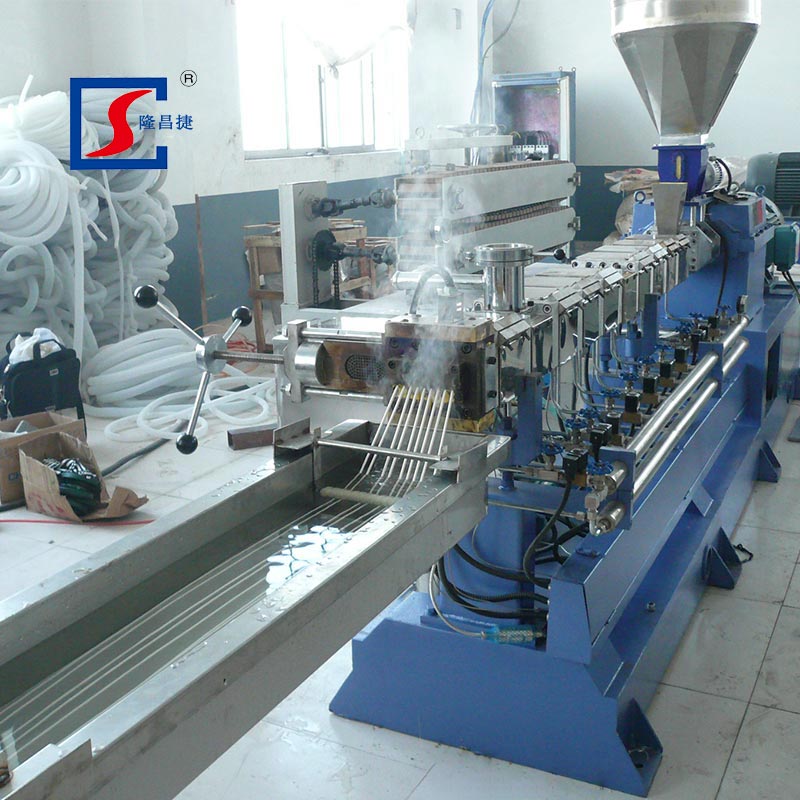
A plastic granulator machine is industrial equipment designed to reduce plastic materials into smaller particles through cutting and processing.
Unlike simple crushing equipment, a granulator focuses on producing relatively uniform plastic particles that can be reused in manufacturing processes.
Common materials processed by plastic granulator machines include:
The working principle of a plastic granulator machine is based on high-speed cutting between rotating blades and fixed blades.
The basic process includes:
Plastic waste feeding
↓
Rotating blades cut the material
↓
Plastic pieces pass through a screen
↓
Uniform granulated particles are collected
The screen size determines the final particle size, allowing users to adjust the output according to different recycling requirements.
A plastic granulator machine consists of several important components that work together to achieve efficient material processing.
The rotor is the rotating part equipped with cutting blades. Its speed and design influence cutting efficiency and output capacity.
Fixed blades work together with rotor blades to cut plastic materials into smaller pieces.
The screen controls the size of the final plastic particles. Different screen openings can produce different output sizes.
The motor provides power for the cutting system and determines the machine's processing capability.
The feeding structure helps deliver plastic materials into the cutting chamber safely and efficiently.
Plastic recycling requires efficient size reduction before materials can be reused. A plastic granulator machine provides several important advantages.
Large plastic waste items are difficult to reuse directly. Granulation reduces their size and prepares them for further recycling processes such as washing, drying, and pelletizing.
Plastic waste takes up significant storage space. Processing materials into smaller particles makes transportation and handling easier.
Granulated plastic can often be used as recycled material in new production processes, helping reduce dependence on virgin plastic resources.
A consistent particle size allows downstream recycling equipment to process materials more effectively.
Plastic granulator machines are widely used in many industries related to plastic production and recycling.
Manufacturers use granulators to process production scraps generated during injection molding, extrusion, and other plastic manufacturing processes.
Recycling facilities use granulators as an important step in converting waste plastics into reusable materials.
Plastic packaging waste, including bottles and containers, can be processed through granulation systems.
Plastic components from automotive production and recycling operations can be reduced into smaller particles for reuse.
| Feature | Plastic Granulator Machine | Plastic Crusher |
|---|---|---|
| Processing Method | High-speed cutting | Crushing by mechanical force |
| Output Size | More uniform particles | Larger and less consistent pieces |
| Main Purpose | Material recycling and reuse preparation | Initial size reduction |
| Precision | Higher particle size control | Basic size reduction |
| Typical Application | Recycling systems and plastic processing | Waste reduction and primary processing |
Used for general plastic recycling applications, including production waste and common plastic materials.
Designed for processing larger or stronger plastic materials that require higher cutting power.
Used in large production facilities where multiple machines send plastic waste to a central recycling system.
Suitable for smaller production lines or applications requiring compact recycling solutions.
Several factors influence the efficiency of a plastic granulator machine:
Regular maintenance helps maintain stable operation and extend equipment service life.
Important maintenance steps include:
The circular economy focuses on reducing waste and maximizing resource reuse. Plastic granulator machines support this goal by converting discarded plastics into reusable materials.
Through efficient size reduction and recycling preparation, granulators help:
As recycling requirements continue to increase, plastic granulator technology is developing toward higher efficiency and smarter operation.
Future trends may include:
A Plastic Granulator Machine is an important part of modern plastic recycling systems. By reducing plastic waste into reusable particles, it helps improve material recovery, reduce waste volume, and support sustainable production.
As industries continue to focus on recycling and resource efficiency, plastic granulator machines will remain an essential solution for turning plastic waste into valuable materials.